This post isn't aggression against Christian video game makers, but it is a critical commentary concerning the effectiveness of the Jesus' great commission (Matthew 28:18-20) to his disciples to baptize and make disciples through out the earth.
It takes a lot of work and hours to make a video game. I'm not dogging that. However, the conveyed message in many Christian video games are often counter-productive to the furthering of the Gospel of Jesus Christ.
There's a number of points I could hit on, I want to hit on the following:
1. God's sovereignty and the story of the Bible
2. Death and failure
3. The Main Character
4. Mission and Purpose
5. Copy Cat Games
On a tangent, sometimes I wonder the sort of readership this blog would actually attract... Most dedicated Christians shun video games. And dedicated gamers (or hardcore gamers, if you prefer the nomenclature) tend to shy away from church or organized anything that isn't a guild or online forum community (see video below of the guy reviewing Captain Bible)
God's Sovereignty
If a Christian video game of an action genre was to be theologically correct, there are three ways it could go. None of which I've seen yet:
1. No Fail Mode.
Game starts: the end is in total foreknowledge of God... Jesus wins. plz roll credits. Boring for a video game, excellent for assurance of salvation in the trials and suffering of life... almost makes you want to go outdoors and try living real life instead.
2. Everlasting Condemnation Mode
You are the enemy fighting against God. Everything you do is thwarted and you can only take pride in the number of people you brought to destruction with you in the name of a "high score" which you will watch get destroyed by your adversary, Jesus, in laughter and joy, without hindering his plan in the slightest. The game may last 2 minutes. It could last hours, but the ending is the same and your efforts are forever frustrated as you think that maybe there was a way to go about differently to win. Think Tetris Game Mode A or Yar's Revenge. No matter how skilled your are, it will end. And it will not go well for you.

3. Mystery Pseudo Peril Mode
The player is left completely in the dark. They are God's elect and they are shown enough to persevere and find victory, but the game ends before the ending of the story. Fast forward to the end of history: It was just no fail mode all along. I deceived you! There are only two story types.
According to the Bible, which Christians believe. God has got the universe on lock and has dealt with evil. To make a game that has a confluence with the scriptures of the Bible that is theologically sound and points to the Jesus of the Bible without tarnish, you are looking at a game that doesn't leave much to the player or pits the player against an almighty creator in which he is destined to lose. Think playing Nintendogs except you're the Nintendog and you are put into situations that seem dire which turn out to be for your sanctification. Reflecting a life of faith in a game, so developers turn to other means to make up for the whole complete sovereignty thing.
Death and Failure
Human experience is in a world of death and failure. Failure on our own part, failure of others, failures of society, death of loved ones, real enemies, needing to survive against the odds, etc, etc. Great stuff to implement and focus on when making games. Trying to reconcile these concepts to what our current video game standards doesn't work: God's sovereignty, failure, and great interactive experience. This is where developers really depart: temptation meter, do overs, spirit points, fruits of the spirit, pieces of some holy thing to collect, covenant stats, whatever. This is trivializing the Christian faith as various elements found in Christian scripture are turned into variables that the player must collect, develop or abolish in order to progress the game. Speaking of failure.

So what's the big deal? This is the big deal:
A Christian video game will tend to trivialize with one hand what they uphold with the other as holy.
That's a problem.
The Main Character
Who is the main character in the Bible? If you said God, you are correct. He shows up in 65 of the 66 books in the Bible (the book of Esther he's implied by the fact that it's about his people and displaying the providence provided and showing the theme of sovereignty without direct contact with the people shown in that book). No one else gets that claim. So this presents two dilemmas to solve making a game that will be effective (both sells and people want to play):
1. Game progression
2. Biblical Truth
Video games don't generally progress without the player "doing" something. The problem with a story driven by doing based on the Bible is that is driven by what Jesus has done, not what a person does. If you're unsure why this is a problem see back to game type one in section on sovereignty (Spoiler: Jesus wins). The best you can do with that set up is have the game start and end happen immediately and have a few thousand years of a Yes/No menu appear saying "Did Jesus really win?" and continually answering yes except when you doubt, say no, repent, and say yes again. A game cannot be truly Christian without making Jesus the initiator. That would mean unless you play as Jesus, your character is inconsequential in moving the story forward unless God enables the player to do so.
This leads to the second problem: simulating the God of the Bible. Good luck. For a game to be great the experience of the game itself needs to be excellent. The easiest thing to do is cut corners by making the whole thing really campy and cheesy. That departs from the reality of Jesus Christ, and it's all down hill from there. Maybe it'd be a fun game, but you'd probably make a better one by not trying to make a game on par with the Bible.
Mission and Purpose
The mission and purpose is going to be outlined by how the game views God's sovereignty, Death and failure, and who the main character is.
With the securing of salvation and all of human history being brought to justice. A Christian game will generally go into something trivial which either distorts the character of God or distorts what the life of Christian is to be. Maybe fighting demons (with a chance of failure and game over) or fighting something else, where faith in Jesus is trivialized into some sort of points.
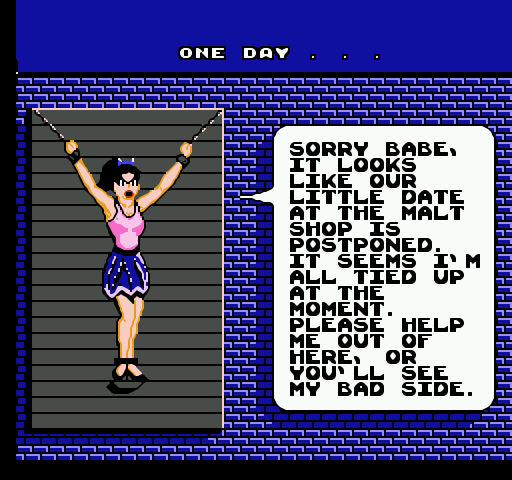
I'm not much of one for easy targets. But Captain Bible in The Dome of Darkness is just too easy not to mention and is the campiest perfect example of getting it all wrong.
A book could be written on the problems with this, but I'll just give you a bullet list.
4. Mission and Purpose
5. Copy Cat Games
On a tangent, sometimes I wonder the sort of readership this blog would actually attract... Most dedicated Christians shun video games. And dedicated gamers (or hardcore gamers, if you prefer the nomenclature) tend to shy away from church or organized anything that isn't a guild or online forum community (see video below of the guy reviewing Captain Bible)
God's Sovereignty
If a Christian video game of an action genre was to be theologically correct, there are three ways it could go. None of which I've seen yet:
1. No Fail Mode.
Game starts: the end is in total foreknowledge of God... Jesus wins. plz roll credits. Boring for a video game, excellent for assurance of salvation in the trials and suffering of life... almost makes you want to go outdoors and try living real life instead.
2. Everlasting Condemnation Mode
You are the enemy fighting against God. Everything you do is thwarted and you can only take pride in the number of people you brought to destruction with you in the name of a "high score" which you will watch get destroyed by your adversary, Jesus, in laughter and joy, without hindering his plan in the slightest. The game may last 2 minutes. It could last hours, but the ending is the same and your efforts are forever frustrated as you think that maybe there was a way to go about differently to win. Think Tetris Game Mode A or Yar's Revenge. No matter how skilled your are, it will end. And it will not go well for you.
Relentless building block video puzzle? More like assured destruction in frustrated agony.
3. Mystery Pseudo Peril Mode
The player is left completely in the dark. They are God's elect and they are shown enough to persevere and find victory, but the game ends before the ending of the story. Fast forward to the end of history: It was just no fail mode all along. I deceived you! There are only two story types.
According to the Bible, which Christians believe. God has got the universe on lock and has dealt with evil. To make a game that has a confluence with the scriptures of the Bible that is theologically sound and points to the Jesus of the Bible without tarnish, you are looking at a game that doesn't leave much to the player or pits the player against an almighty creator in which he is destined to lose. Think playing Nintendogs except you're the Nintendog and you are put into situations that seem dire which turn out to be for your sanctification. Reflecting a life of faith in a game, so developers turn to other means to make up for the whole complete sovereignty thing.
Death and Failure
Human experience is in a world of death and failure. Failure on our own part, failure of others, failures of society, death of loved ones, real enemies, needing to survive against the odds, etc, etc. Great stuff to implement and focus on when making games. Trying to reconcile these concepts to what our current video game standards doesn't work: God's sovereignty, failure, and great interactive experience. This is where developers really depart: temptation meter, do overs, spirit points, fruits of the spirit, pieces of some holy thing to collect, covenant stats, whatever. This is trivializing the Christian faith as various elements found in Christian scripture are turned into variables that the player must collect, develop or abolish in order to progress the game. Speaking of failure.
"two and two, male and female, went into the ark with Noah, as God had commanded Noah." Genesis 7:9
Just like the written word, yeah?
So what's the big deal? This is the big deal:
A Christian video game will tend to trivialize with one hand what they uphold with the other as holy.
That's a problem.
The Main Character
Who is the main character in the Bible? If you said God, you are correct. He shows up in 65 of the 66 books in the Bible (the book of Esther he's implied by the fact that it's about his people and displaying the providence provided and showing the theme of sovereignty without direct contact with the people shown in that book). No one else gets that claim. So this presents two dilemmas to solve making a game that will be effective (both sells and people want to play):
1. Game progression
2. Biblical Truth
Video games don't generally progress without the player "doing" something. The problem with a story driven by doing based on the Bible is that is driven by what Jesus has done, not what a person does. If you're unsure why this is a problem see back to game type one in section on sovereignty (Spoiler: Jesus wins). The best you can do with that set up is have the game start and end happen immediately and have a few thousand years of a Yes/No menu appear saying "Did Jesus really win?" and continually answering yes except when you doubt, say no, repent, and say yes again. A game cannot be truly Christian without making Jesus the initiator. That would mean unless you play as Jesus, your character is inconsequential in moving the story forward unless God enables the player to do so.
This leads to the second problem: simulating the God of the Bible. Good luck. For a game to be great the experience of the game itself needs to be excellent. The easiest thing to do is cut corners by making the whole thing really campy and cheesy. That departs from the reality of Jesus Christ, and it's all down hill from there. Maybe it'd be a fun game, but you'd probably make a better one by not trying to make a game on par with the Bible.
Mission and Purpose
The mission and purpose is going to be outlined by how the game views God's sovereignty, Death and failure, and who the main character is.
With the securing of salvation and all of human history being brought to justice. A Christian game will generally go into something trivial which either distorts the character of God or distorts what the life of Christian is to be. Maybe fighting demons (with a chance of failure and game over) or fighting something else, where faith in Jesus is trivialized into some sort of points.
I'm not much of one for easy targets. But Captain Bible in The Dome of Darkness is just too easy not to mention and is the campiest perfect example of getting it all wrong.
But Really... This is so hard to look at.
A book could be written on the problems with this, but I'll just give you a bullet list.
- The hero of the story is "Captain Bible" (not Jesus)
- The game starts because the organization known as "Bible Corps" could not defeat the deception of the evil "cybers" and a town fell into darkness (but they weren't deceived, I guess, because I guess that's how deception works.)
- God is a magical genie who supplies you at faith stations with: (this is all very trivial)
- Tips against deception
- restoring your faith meter (a percentage meter, just like real life, right)
- giving/recharging the sword of the spirit (a sword you attack enemies in)
- your enemy is robots and all the people are victims without control, falling into deception and lies because they are powerless.
- The list could continue.
Watch the video if you need more.
I don't know much about the people who have made these games, their motives, or how hard they labored on their projects. If you are a Christian game developer attempting to make a game for the purpose of education in scripture or evangelism, think carefully about what you are actually doing. Consider not just the mission and purpose in the game, but the mission and purpose of your project. You're likely to be more effective working on secular games and putting your efforts of Jesus' great commission into practice in who God has made you to be where ever God puts you in your relationship with him, circumstances, and relationships with others, not what you make with your gifting.
I believe a theologically accurate and excellent Christian video game title is very plausible. I believe it takes far more effort to do it well than a secular game, so much so that it hasn't been done yet.
This isn't a condemnation of all Christian video games, but I don't see anyone looking at this from an analytical view of what is truly wrong with Christian video games. Most the world is cynical or scoffs, some Christian circles will use these to appease the Christian parent who doesn't want their child doing anything that might make them see what the world is really like. There are Christian blogs that use culture as a means of evangelism in a mission work sort of way. They tend to be more concerned with mainstream and secular games and steer away from any Christian title knowing that they're usually pretty lame not fun to play and they are right. They are better off engaging their audiences with secular games with a Christian perspective than introducing them to the train wreck of games that claim to be Christian.

I believe a theologically accurate and excellent Christian video game title is very plausible. I believe it takes far more effort to do it well than a secular game, so much so that it hasn't been done yet.
This isn't a condemnation of all Christian video games, but I don't see anyone looking at this from an analytical view of what is truly wrong with Christian video games. Most the world is cynical or scoffs, some Christian circles will use these to appease the Christian parent who doesn't want their child doing anything that might make them see what the world is really like. There are Christian blogs that use culture as a means of evangelism in a mission work sort of way. They tend to be more concerned with mainstream and secular games and steer away from any Christian title knowing that they're usually pretty lame not fun to play and they are right. They are better off engaging their audiences with secular games with a Christian perspective than introducing them to the train wreck of games that claim to be Christian.
Jesus Games. From Gamechurch.com
In short, Christian games do worse for spreading the gospel than a Triple A title.
Copy Cat Games
Parody, promotion of another industry, or out of the sake of practicality. There is a time and place to copy another game. Christian games seem to just ride on the coat tails of their secular contemporaries making themselves irrelevant to the fact that the idea of innovation and creativity is an after thought for getting their games published. Gamers, name the first Christian development company that comes to mind that innovated in the game industry! Come on, think think think think. None? Same here. I'm not say Christians are unoriginal, I'm just pointing out our public track record in the gaming industry.



Not all copy cat is bad. For instance, Christian Rapper, Pro, has a parody/promo one level flash game put out by his record label in the style of Altered Beast on Sega Genesis called Altered Pro to promote his record "Dying to Live". They basically play off the "Rise from your grave!" opening line from Altered Beast and then you fight a bunch of zombies with no sort of real level design, then suddenly you fight a disfigured demonic version of yourself. It got its point across. If Pro was a game designer, I'd be a little disappointed. But throwing this together in Flash or Construct in a weekend to promote a rap album is just promo. It fulfilled its mission and purpose. It didn't try to give a message other than an opening for people to check out his record. No Bible verses, just a simple beat'em up.
For more info, and a secular perspective on the poor reputation Christian video games have, take a look at this blog post from powet.tv
Lastly. This Christian game pains me...

This game exists because there are parents who think by letting their kid play music games that don't have "devil" music in them they are doing them a favor. Reality is this game has just as much of the sensational drive of being a *gasp* rock star as the Guitar Hero and Rock Band.
I don't see a problem with Rock Band or Guitar Hero, I prefer to shred manually, is all, but the games themselves are fun to play at parties and a lot of people are into them.
 Me, manually shredding.


Copy Cat Games
Parody, promotion of another industry, or out of the sake of practicality. There is a time and place to copy another game. Christian games seem to just ride on the coat tails of their secular contemporaries making themselves irrelevant to the fact that the idea of innovation and creativity is an after thought for getting their games published. Gamers, name the first Christian development company that comes to mind that innovated in the game industry! Come on, think think think think. None? Same here. I'm not say Christians are unoriginal, I'm just pointing out our public track record in the gaming industry.
lolololololololololololol... Granted, Wisdom Tree was a subsidiary of Color Dreams.
no... seriously tho, Guess which one was developed 5 YEARS before the other? Hint: it's in the copy right info of the first picture set.
Not all copy cat is bad. For instance, Christian Rapper, Pro, has a parody/promo one level flash game put out by his record label in the style of Altered Beast on Sega Genesis called Altered Pro to promote his record "Dying to Live". They basically play off the "Rise from your grave!" opening line from Altered Beast and then you fight a bunch of zombies with no sort of real level design, then suddenly you fight a disfigured demonic version of yourself. It got its point across. If Pro was a game designer, I'd be a little disappointed. But throwing this together in Flash or Construct in a weekend to promote a rap album is just promo. It fulfilled its mission and purpose. It didn't try to give a message other than an opening for people to check out his record. No Bible verses, just a simple beat'em up.
For more info, and a secular perspective on the poor reputation Christian video games have, take a look at this blog post from powet.tv
Lastly. This Christian game pains me...
In case you weren't self centered enough, glorify the idea of being a rock star, USING JESUS
This game exists because there are parents who think by letting their kid play music games that don't have "devil" music in them they are doing them a favor. Reality is this game has just as much of the sensational drive of being a *gasp* rock star as the Guitar Hero and Rock Band.
I don't see a problem with Rock Band or Guitar Hero, I prefer to shred manually, is all, but the games themselves are fun to play at parties and a lot of people are into them.

Rhythm games are great, but Christian rhythm games hit close to home for another reason. For one, these are called praise songs. Why? When they are used simply for secular entertainment? Who are these songs for? These questions make me furious at the fact that there is a "market" for music meant for worship to my eternal all powerful God. Again, why would a rhythm game, pertaining to "Praise" music make the main character of the game YOU! Rocking out on a stage, whipping the crowd up in a fury because you hit more right notes than wrong notes.
In real life it takes more than right notes to get the crowd amped.
But in terms of a Christian game making you the star:
Oh music? Yeah, I'm God and created the physics and scientific laws of sound behind it, among other things. Hey check out this riff I wrote an Eternity ago. You've probably never heard it.
Why would a Christian game make the main character, the one people cheer for, sing with, raise hands to, the avatar of the Character (who isn't Jesus). Why not just call the game "Another Guitar Game: Christian Lyric Inspired Performance Simulator"
That's what it is.
I'll try to post more in the near future. I'm having more and more thoughts on what I'm calling the Philosophy of development, in terms of developing anything creative. Whether or not you see a blog post, I don't know. I also hope to post some videos on what I've been doing with chiptune music and Gameboy modding.


I really like your blog! Read the other posts as well.
ReplyDelete"Think playing Nintendogs except you're the Nintendog and you are put into situations that seem dire which turn out to be for your sanctification." Haha.
I completely agree about "Christian video games". Seems like the best way to point toward God in a video game might be to either have the game be an allegory (which would be extremely difficult to do all that well, but potentially doable) or just bring up points to consider and let the game have the possibility of NOT forcing a video game form of Christianity as the only world view a decent person would follow, since we all know it's far from that simple in real life.
(Oh, by the way, your "Captain Bible in The Dome of Darkness" media doesn't seem to be showing up on your blog)